
Process Troubleshooting: Why Small Issues Become Major Failures

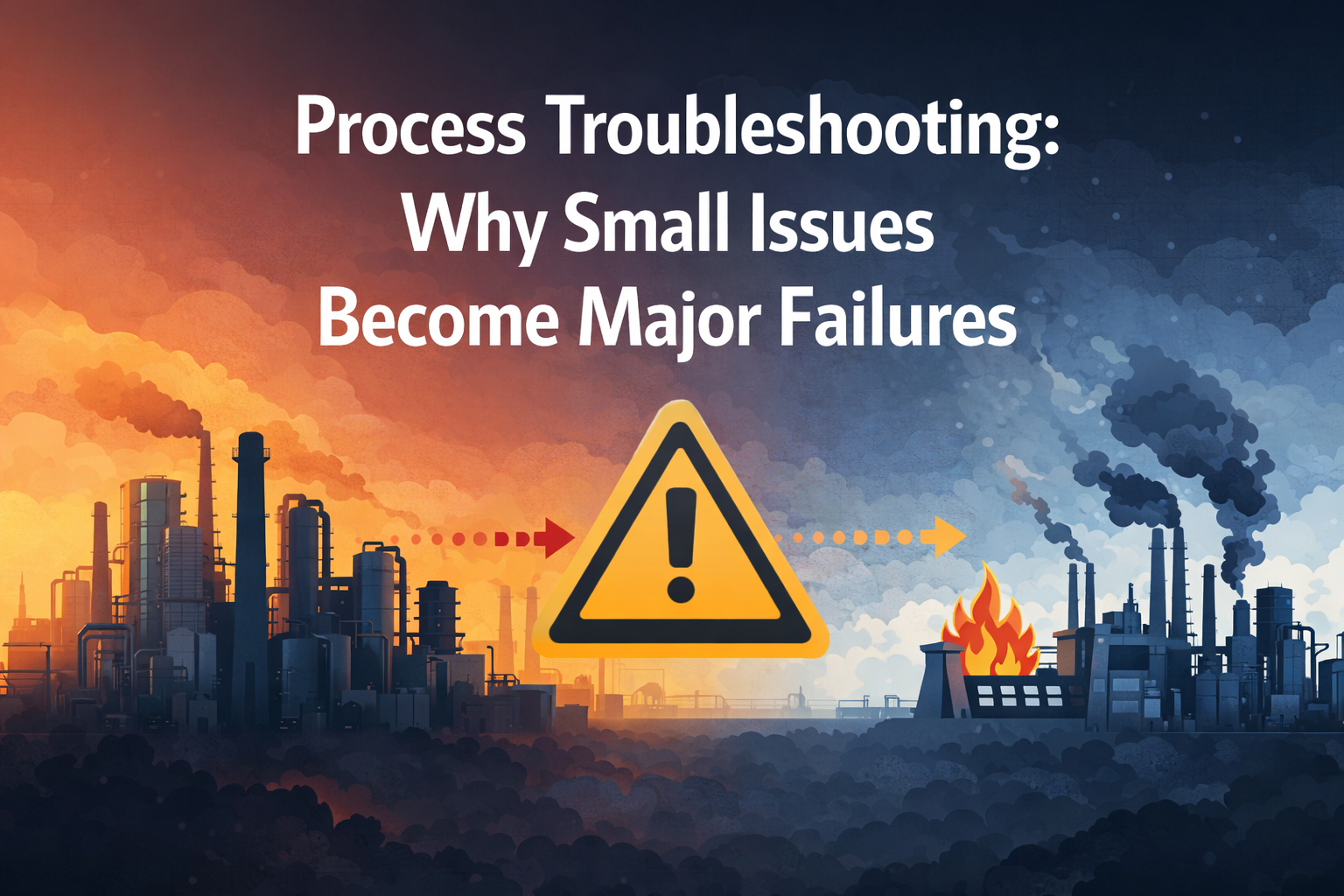
Process Troubleshooting: Why Small Issues Become Major Failures
In chemical and process industries, most major failures do not start as major
problems.
They begin as small process concerns—often ignored, normalized, or temporarily
fixed.
Over time, these minor concerns quietly grow into chronic issues that plants and
operating teams are forced to live with.
The Typical Cycle We See in Plants
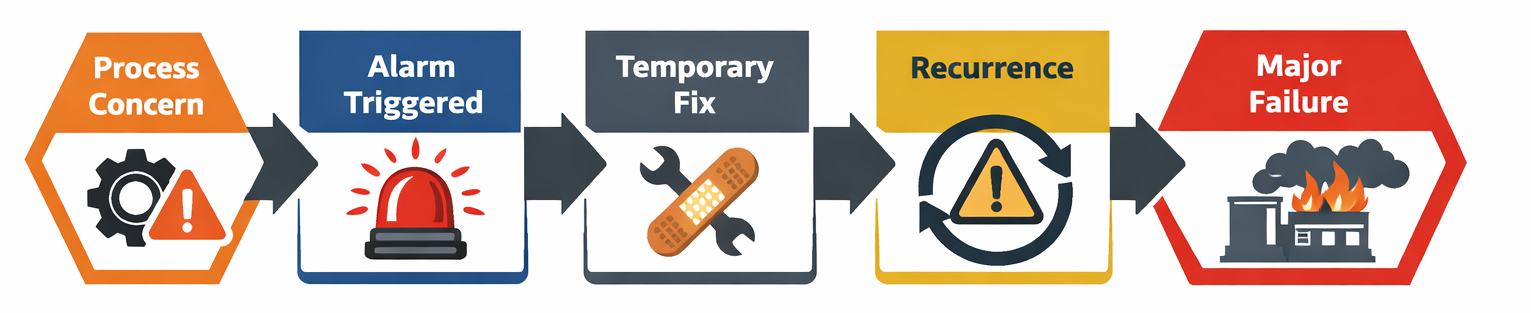
�� Process Concern → Alarm → Temporary Fix → Recurrence → Major Failure
A deviation appears
An alarm is triggered
A quick fix restores production
The issue returns intermittently
Eventually, it escalates into a serious operational or safety incident
This pattern is far more common than we like to admit.
Why Early Signs Are Missed
Identifying early process concerns is difficult. It requires:
Continuous process monitoring
Reliable instruments and analyzers
Clean, well-sanitized historical data
Properly maintained process documentation
While many large organizations invest in monitoring systems, the quality of data
and documentation often degrades over time. Intermittent alarms are dismissed
as instrument issues, and the real process problem remains unattended.
The Pressure That Makes It Worse
In today’s environment of:
Margin pressure
Cost reduction targets
Market volatility
Companies naturally prioritize short-term production recovery over deep root-
cause analysis. Instant troubleshooting restores margins quickly—but often leaves
the real cause unresolved.
This approach may work temporarily, but it pushes the problem into the next
cycle, often with greater severity and higher risk.
What Effective Process Troubleshooting Really Means
True process troubleshooting is not firefighting.
It is a structured approach that focuses on:
Root cause identification
Data-based analysis
Sustainable corrective actions
Prevention of recurrence
This requires time, the right tools, reliable data, and disciplined
documentation—areas that rarely show immediate financial payback, but are critical
for long-term stability.
Why This Matters More Than Ever
Whether small or large, every chemical plant today faces uncertainty:
Feedstock changes
Product flexibility
Demand fluctuations
In such conditions, strong troubleshooting capability is no longer optional. It is
essential for safe operations, consistent quality, and long-term survival.
Short-term pain in strengthening troubleshooting systems often prevents long-term
failures.
Final Thought
Most plants don’t fail because of one big mistake.
They fail because small problems were allowed to repeat—unchecked.
Investing in process troubleshooting is not a cost.
It is risk reduction.